

Download the Whitepaper
New Whitepaper

Is it real?  The New Age of AI Fraud.

From deepfake movies to real-world fraud: the threat is no longer fiction.

Together with Biometric Update, we’ve compiled the research, data, and threat analysis into a new whitepaper designed for security leaders, fraud teams, and identity architects.

Download the full report to understand how sophisticated fraud works

Download the Whitepaper

When Fraud Looks Like a Movie Scene

For years, realistic face manipulation belonged to films like Mission Impossible or Face/Off.

What once required Hollywood budgets now costs less than $6 per month using Fraud-as-a-Service tools powered by generative AI.

Today, the same techniques are being weaponized
by fraudsters.

Download the Whitepaper

The Numbers Behind the Threat

Recent data reveals a dramatic acceleration in advanced fraud attempts.

Unico Research (2024-2025). Data based on proprietary analysis of
AI-accelerated fraud attempts and market projections.

Global Fraud Trends:

Increase in sophisticated fraud attempts in 2025

+1082%

Expected growth in 2026 under conservative projections

+150%

Growth in AI-accelerated scenarios

Up to +550%
What we are witnessing is not just more fraud — it is smarter fraud.

The whitepaper analyzes real attack data and explains why generative AI is rapidly lowering the barrier to entry for cybercriminals.

Download the Whitepaper

Anatomy of a Modern Identity Attack

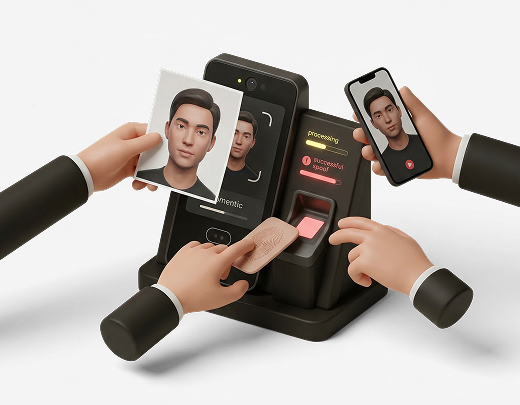
Modern biometric fraud typically falls into two major categories:

Presentation Attacks

(Physical spoofing)

Fraudsters attempt to deceive the device camera using physical artifacts.

Common techniques include:

- Deepfake videos displayed on curved monitors to simulate 3D depth

- Optical manipulation with mirrors to distort reflections and bypass texture analysis

- High-resolution screen playback designed to mimic live behavior

Injection Attacks

(Digital bypass)

Instead of tricking the camera, attackers bypass it completely: In 2025: 45.5% of sophisticated attacks occurred through injection techniques.

Examples include:

-  FaceSwap: Overlaying a victim’s facial features onto the attacker.

-  Blending: Merging real human traits with victim biometrics to produce a hybrid identity capable of passing weaker verification systems.

These attacks are invisible to traditional camera-based liveness detection.

The Technology Powering the New Fraud Economy

Three technologies are accelerating the rise of sophisticated fraud:

Deepfakes

AI-generated media capable of replicating facial expressions, lip movements, and natural human behavior.

Synthetic Identities

Ghost people” created by combining leaked personal data with AI-generated faces.

Fraud-as-a-Service

Subscription-based criminal toolkits that allow anyone to launch advanced attacks.

The result is a new cybercrime economy where Hollywood-level deception is available for $6/month.

Download the Whitepaper

Register now for instant access to the Whitepaper

© 2026 Unico. All Rights Reserved